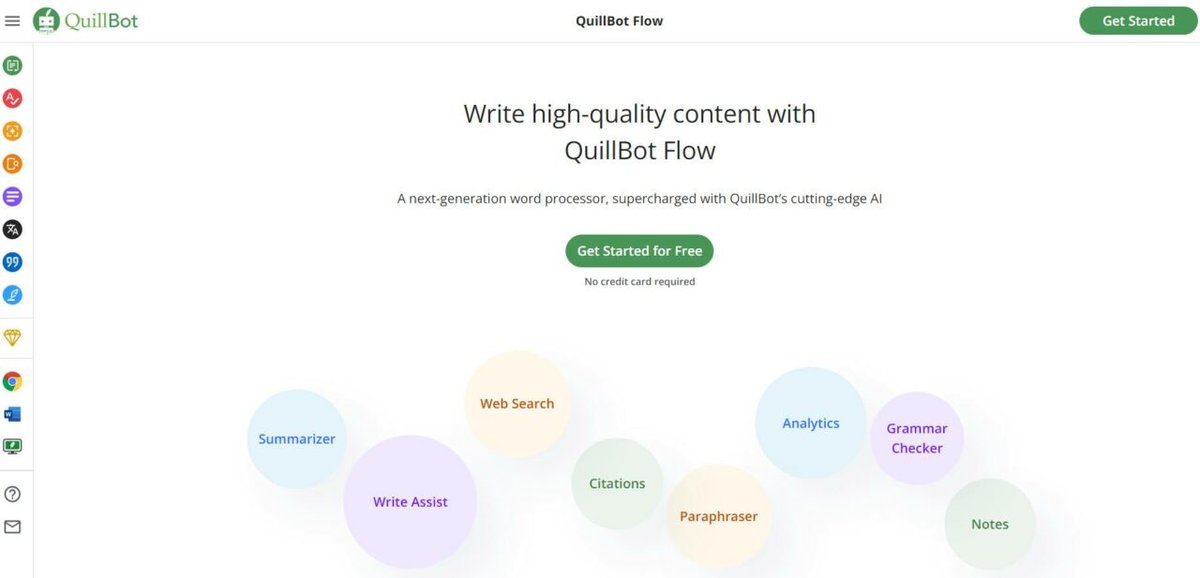
Crafting academic papers can often feel like juggling flaming torches while riding a unicycle – exhilarating, yes, but also fraught with the risk of error. One of the most common stumbling blocks? Accurate, consistent citations. It's not just about avoiding plagiarism; it's about building credibility, acknowledging intellectual debt, and providing a roadmap for your readers. This guide cuts through the complexity, focusing on Integrating QuillBot Citations into Academic Papers & Research to streamline your workflow and enhance your writing integrity. We'll explore how QuillBot’s powerful tools fit into every stage of your research and writing process, transforming a tedious chore into a seamless part of your academic journey.
At a Glance: Mastering Citations with QuillBot
- Start Early: Record source details as you research, not just when you write.
- Draft Smart: Include basic citation information in your first draft to prevent oversight.
- Automate with Precision: Use QuillBot's Citation Generator to create accurate in-text citations and reference lists.
- Choose Your Style: Easily switch between APA, MLA, Chicago, and more within QuillBot.
- Verify Integrity: Always run your final paper through QuillBot’s Plagiarism Checker.
- Human Review is Key: QuillBot is a tool; your critical eye remains indispensable for accuracy.
The Unseen Burden: Why Accurate Citations Are Non-Negotiable
Before diving into the "how," let's quickly underscore the "why." In the rigorous world of academia, citations aren't mere formalities; they are the bedrock of intellectual honesty and scholarly communication. They serve multiple vital purposes:
- Preventing Plagiarism: This is the most obvious. Attributing ideas, words, or data to their original creators protects you from accusations of academic misconduct.
- Enhancing Credibility: Well-cited papers demonstrate thorough research and a deep engagement with existing scholarship, positioning you as a trustworthy voice.
- Guiding Readers: Citations provide a clear path for others to locate your sources, verify your claims, and delve deeper into the subject matter.
- Participating in Dialogue: By citing, you engage in the ongoing conversation within your field, building upon the work of others and contributing your own insights.
Failing to cite correctly can undermine your paper, your reputation, and the very foundation of academic integrity. It's a high-stakes game, and a systematic approach is your best defense.
The Citation Challenge: Where QuillBot Steps In
Let's be honest: generating citations can be tedious. You're juggling different source types (books, journal articles, websites, interviews), varying publication details, and the often-fickle rules of multiple style guides (APA, MLA, Chicago, Harvard, etc.). Common pain points include:
- Manual Errors: A misplaced comma, a forgotten page number, or an incorrect author initial can compromise the citation's accuracy.
- Time Consumption: Manually looking up rules for each source and formatting them takes valuable time away from crafting your arguments.
- Style Guide Complexities: Keeping track of every subtle nuance between different citation styles is a full-time job in itself.
- Inconsistency: Maintaining uniform formatting throughout a long paper, especially when dealing with many sources, is notoriously difficult.
This is precisely where QuillBot evolves beyond a mere paraphrasing tool. It offers robust features designed to alleviate these pressures, transforming citation management from a stress-inducing task into a supportive process.
QuillBot's Role in Your Citation Workflow: More Than Just Paraphrasing
Many users know QuillBot for its AI-powered paraphrasing capabilities, which help refine your language and avoid unintentional plagiarism. However, its utility extends far beyond rephrasing sentences. QuillBot is designed as a comprehensive writing assistant, offering tools that support the entire academic writing lifecycle, including:
- The Power of the Citation Generator: At its core, QuillBot provides an intuitive Citation Generator. This tool automatically formats citations and bibliographies according to your chosen style guide, significantly reducing manual effort and potential errors.
- Integrating the Plagiarism Checker: Once your citations are in place, QuillBot's Plagiarism Checker offers a crucial final line of defense. It scans your paper against a vast database to ensure all content is properly attributed and to identify any accidental instances of non-original text. This checker is an indispensable step after you’ve integrated your citations, ensuring your academic integrity is solid.
Think of QuillBot as an intelligent co-pilot for your academic writing. It handles the mechanics, freeing you to focus on the intellectual heavy lifting: research, analysis, and argumentation.
Your Step-by-Step Guide to Integrating QuillBot Citations
Effectively integrating QuillBot into your academic process means weaving its tools into a deliberate, multi-stage workflow. Here’s how to do it, based on best practices and QuillBot's own advice:
Step 1: Meticulous Research & Source Tracking (The Foundation)
Before you even write your first sentence, meticulous source tracking is paramount. This isn't just about collecting sources; it's about gathering the data needed for accurate citations.
How to Do It:
As you conduct your research, whether it's poring over books, journals, or websites, immediately record all relevant citation information for any source you anticipate using.
- For Books: Author(s), title, year of publication, publisher, city of publication, edition (if applicable), page numbers for direct quotes or specific ideas.
- For Journal Articles: Author(s), article title, journal title, volume, issue, year, page range, DOI (Digital Object Identifier) or URL.
- For Websites: Author/organization name (if available), title of page/article, website name, publication date (if available), URL, access date.
- For Other Media: Specific details pertinent to the source type (e.g., director, studio for a film; artist, album for music).
Pro Tip: Don't rely on memory. Use note cards, a dedicated digital document (like a Word doc, Excel sheet, or a research management tool), or even a simple text file. The key is consistency. "Record quotes and ideas carefully, along with the page numbers where you found them," advises QuillBot's blog. This foresight saves countless hours later.
Step 2: Drafting with Preliminary References
Once you begin writing your paper, you don't need to stop and create perfectly formatted full citations for every single reference. That's a surefire way to break your flow.
How to Do It:
As you write your first draft, include enough minimal citation information in the text to clearly identify the source. This acts as a placeholder and ensures you don't forget where an idea or quote came from.
- Example for an Idea: (Smith, 2023) or (Jones, 2018, p. 45).
- Example for a Direct Quote: "..." (Miller, 2020, p. 112).
This "rough" citation serves as a marker. As QuillBot's blog suggests, "When writing your first draft, include enough citation information in the text to ensure accurate referencing." This step is about content and structure; perfect formatting comes later.
Step 3: Generating In-Text Citations with QuillBot
After your draft is complete and your arguments are solid, you can now go back and integrate precise, style-compliant in-text citations using QuillBot.
How to Do It:
- Access the Citation Generator: Navigate to QuillBot's Citation Generator tool.
- Select Your Style: Choose your required citation style (e.g., APA, MLA, Chicago). This is crucial for consistency.
- Input Source Details: For each source you referenced in your draft, input the specific details you meticulously recorded in Step 1. The generator will prompt you for source type (book, journal, website, etc.) and then for the relevant information (author, title, year, publisher, page numbers, etc.).
- Generate Citation: QuillBot will instantly generate the correctly formatted in-text citation based on your input and chosen style.
- Integrate into Your Paper: Copy the generated in-text citation and paste it into your paper, replacing your preliminary references from Step 2. Pay close attention to context – whether it's a parenthetical citation, a narrative citation, or a footnote.
Step 4: Building Your Reference List/Bibliography
This is where QuillBot truly shines, compiling your entire list of sources with a few clicks.
How to Do It:
- Continue Adding Sources: As you generate in-text citations, QuillBot's Citation Generator typically keeps a running list of all sources you've input.
- Generate Full Reference List: Once you've entered all your sources, the tool allows you to export or copy the complete, alphabetized reference list (or bibliography) in your chosen style. This list will include all the detailed source information necessary for readers to locate them.
- Review and Refine: While QuillBot automates the formatting, a human eye is still invaluable. Cross-reference the generated list against your original source notes. Check for:
- Completeness: Are all necessary details present?
- Accuracy: Are names, dates, and titles spelled correctly?
- Consistency: Is the formatting uniform across all entries? (e.g., all book titles italicized, all journal article titles in quotes if required by style).
Remember, QuillBot's Citation Generator is specifically designed to help you Generate citations with QuillBot efficiently and accurately. Leveraging it at this stage ensures your reference list is polished and professional.
Step 5: The Final Integrity Check: QuillBot's Plagiarism Checker
With all your citations in place, both in-text and in your reference list, it's time for the ultimate check.
How to Do It:
- Upload Your Paper: Use QuillBot's Plagiarism Checker by uploading your final academic paper.
- Run the Scan: The checker will analyze your document against a vast database of web pages, academic papers, and other sources.
- Review the Report: Carefully examine the plagiarism report. It will highlight any passages that match existing content and indicate whether those passages are cited.
- Address Issues: If the checker flags a passage as potentially plagiarized but you know it's a legitimate quote or paraphrase that you've cited, double-check your citation. If it's flagged and not cited, ensure you either paraphrase it in your own words (and cite the source) or quote it directly (and cite the source with page numbers).
"Finally, use QuillBot’s Plagiarism Checker to double-check your work and avoid plagiarism," emphasizes QuillBot's advice. This step isn't about distrusting your efforts; it's about providing an objective, automated safety net to catch any oversight before submission.
Mastering Specific Citation Styles with QuillBot
Different academic disciplines often favor specific citation styles. QuillBot's Citation Generator supports the most common ones, making it easier to adapt your paper without extensive manual reformatting.
APA Style Essentials
- Used In: Social sciences, education, engineering, business.
- Key Features: Author-date system for in-text citations (e.g., Smith, 2023). Reference list at the end, alphabetized by author. Focus on clarity and concise reporting of empirical research.
- QuillBot Advantage: When you select APA in QuillBot, it handles the precise formatting for journal articles, reports, websites, and more, ensuring correct capitalization, italicization, and chronological ordering.
MLA Style Nuances
- Used In: Humanities, literature, arts.
- Key Features: Author-page number system for in-text citations (e.g., Smith 45). Works Cited page at the end, alphabetized by author. Emphasis on the author and the work itself.
- QuillBot Advantage: QuillBot correctly formats the unique requirements of MLA, such as container rules for sources within sources (e.g., an essay in an anthology), and handles specific publication details for various media types.
Chicago Style Flexibility
- Used In: History, arts, humanities, social sciences.
- Key Features: Offers two distinct systems:
- Notes and Bibliography: Uses footnotes or endnotes for in-text citations and a comprehensive bibliography.
- Author-Date System: Similar to APA, with parenthetical in-text citations and a reference list.
- QuillBot Advantage: QuillBot allows you to choose between Chicago's notes-bibliography or author-date system, then meticulously applies the chosen format, ensuring all entries adhere to this often-complex style.
A word on other styles: While APA, MLA, and Chicago are the titans, QuillBot may also support others like Harvard, Turabian, or specific university styles. Always check the available options within the generator and ensure it aligns with your institution's requirements.
Best Practices for Human-Centric Citation Management
While QuillBot offers powerful automation, the "human in the loop" remains vital. Here are some best practices to ensure your citation strategy is robust:
Early & Often: Why Procrastination is Your Enemy
Waiting until the last minute to track or generate citations is a recipe for disaster. Embrace the "start early" philosophy. As QuillBot's blog advises, "As you research, write down citation information for any sources you plan to use." This proactive approach embeds good habits into your research process, making the final citation generation significantly smoother.
Double-Checking is Non-Negotiable
Automation is fantastic, but it's not foolproof. Style guides update, and sometimes source information can be ambiguous. Always review QuillBot's generated citations against your original source and your style guide. Think of QuillBot as a highly efficient assistant, not an infallible master.
Understanding the "Why": Beyond Just Mechanics
Don't just generate citations because you have to; understand the principles of academic integrity, intellectual property, and scholarly communication that underpin them. This deeper understanding will make you a more ethical and effective researcher.
Consistency is Key: A Seamless Flow
Ensure your chosen citation style is applied consistently throughout your entire paper – from your in-text citations to your reference list. QuillBot aids in this, but a quick scan of your document can catch any anomalies, especially if you manually adjusted anything.
Leveraging QuillBot's Ecosystem: Tools Working Together
Remember that QuillBot offers a suite of tools. Use the Paraphraser to rephrase ideas while ensuring originality, the Grammar Checker to polish your prose, and then the Citation Generator and Plagiarism Checker for the final integrity checks. These tools are designed to complement each other, offering comprehensive support for academic writing.
Common Pitfalls and How to Avoid Them
Even with advanced tools, writers can stumble. Being aware of common citation pitfalls helps you navigate them gracefully.
Over-reliance on Automation: The Tool vs. the Brain
QuillBot's generator is a fantastic time-saver, but it's not a substitute for understanding citation principles. If you input incorrect source data, the output will also be incorrect. Always feed the tool accurate information and critically evaluate its output. The generator assists; it doesn't absolve you of responsibility.
Ignoring Style Guide Updates: The Evolving Rules
Citation styles are not static; they evolve. APA 7th edition, MLA 9th edition – new versions introduce changes. Ensure QuillBot's generator is set to the correct and most current edition of your required style guide. If unsure, consult your instructor or institutional guidelines.
Improper Source Identification: The Wrong Box
Choosing the wrong source type (e.g., citing a chapter in an edited book as a standalone book) will lead to an incorrectly formatted citation, even if all other details are correct. Take a moment to accurately identify your source type before inputting details into the generator.
Plagiarism Misconceptions: Paraphrasing Isn't Enough
A common misconception is that merely changing a few words constitutes original work. Proper paraphrasing involves significantly rephrasing the original idea in your own words and always citing the source. QuillBot's Paraphraser can help you find fresh wording, but the ultimate responsibility to cite and to ensure sufficient originality lies with you. The Plagiarism Checker is there to confirm your efforts.
QuillBot's Citation Generator: A Closer Look
Let's quickly visualize the ease of using QuillBot's core citation tool for those ready to dive in. When you access the Generate citations with QuillBot, you'll typically encounter:
- Source Type Selection: A dropdown or list of common source types (website, book, journal article, image, etc.). Selecting the correct type instantly customizes the input fields for relevant data.
- Input Fields: Dynamic fields appear based on your source type. For a book, you'll see fields for Author, Title, Publisher, Publication Year, Edition, etc. For a website, perhaps Author, Page Title, Website Name, URL, and Date Accessed.
- Style Guide Selector: A prominent dropdown or toggle to choose your desired citation style (APA, MLA, Chicago, etc.).
- Instant Generation: As you fill in details, QuillBot often generates the citation in real-time or with a single click.
- Running List & Export: The tool typically maintains a list of all citations you've generated during a session, allowing you to review them and then export a complete bibliography or reference list with ease.
This streamlined interface makes the complex task of citation generation remarkably intuitive, minimizing frustration and maximizing accuracy.
Beyond Generation: Ethical Use and Critical Thinking
While tools like QuillBot automate the mechanical aspects of citation, they also free you to engage with the deeper ethical dimensions of academic work. Remember:
- Attribution is Respect: Citing sources is a fundamental act of respect for the intellectual labor of others. It acknowledges their contribution and allows your own work to build upon a solid foundation.
- Develop Citation Literacy: Don't just rely on the tool; learn why certain elements are included in a citation and what different styles emphasize. This literacy makes you a more independent and discerning scholar.
- Your Voice Matters: The proper integration of citations ensures that your unique analysis, synthesis, and argument stand out, supported by evidence, rather than being overshadowed by unattributed information.
Empowering Your Academic Voice: The Next Step
Integrating QuillBot's citation and plagiarism checking tools into your academic process isn't just about avoiding penalties; it's about elevating your scholarship. By systematically tracking sources, leveraging automation for formatting, and conscientiously verifying your work, you build a foundation of credibility and academic integrity that will serve you well throughout your educational and professional journey.
Start by implementing the step-by-step guide outlined here. Next time you embark on a research paper, open QuillBot alongside your research materials. Embrace its capabilities to simplify your workflow, reduce errors, and ultimately, free up more of your mental energy to focus on what truly matters: crafting compelling arguments and contributing meaningfully to your field. Your academic success hinges on both the brilliance of your ideas and the integrity with which you present them. QuillBot is here to help you achieve both.