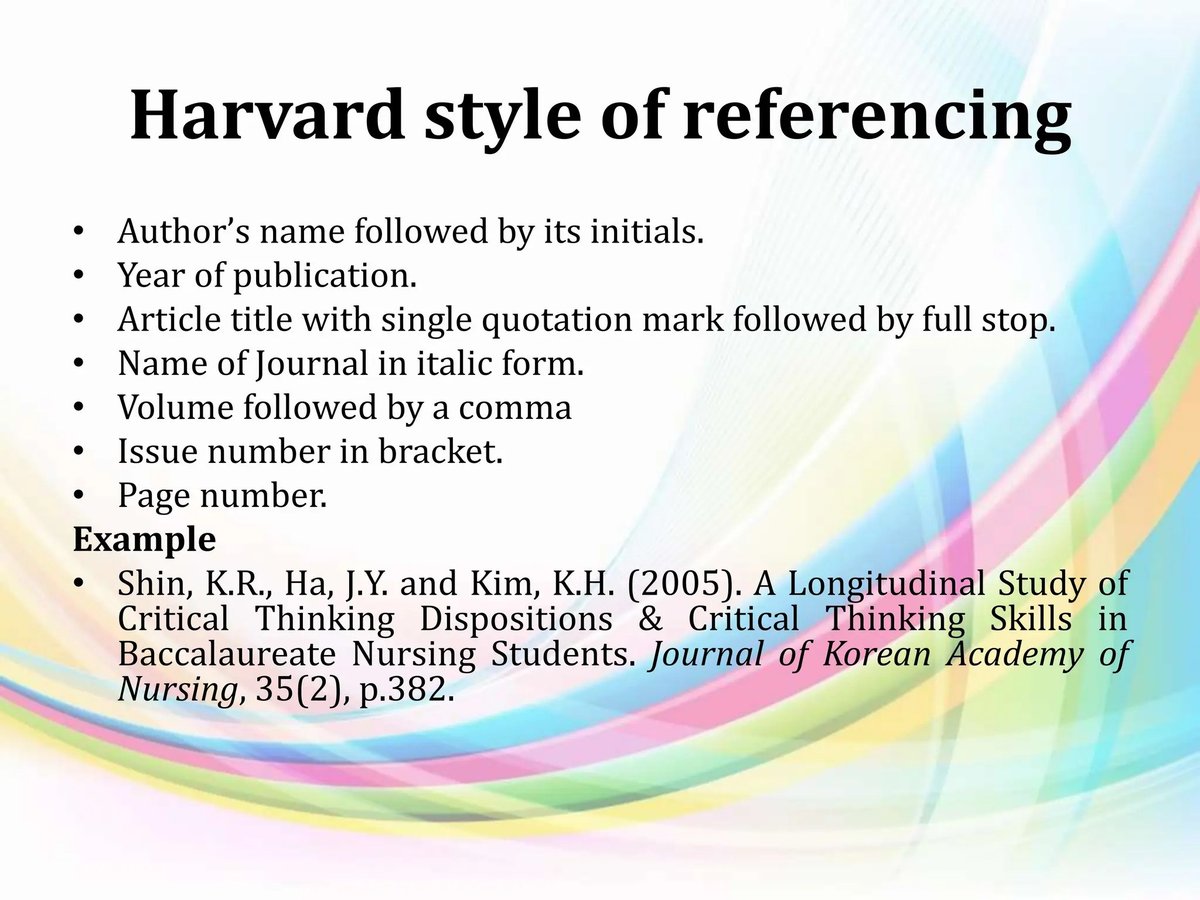
The blinking cursor on a blank page can be daunting enough, but then comes the true academic Everest: mastering citation styles. APA, MLA, Chicago – each a distinct language of academic attribution, critical for demonstrating scholarly integrity and giving credit where it's due. Fumble a comma, misplace a date, and suddenly, your meticulously researched paper feels less credible.
But what if you could navigate this complex terrain with confidence, spending less time on formatting minutiae and more on your actual arguments? Imagine a world where generating accurate, style-compliant citations is as simple as a few clicks. That's precisely the world QuillBot's powerful citation generator opens up for you, transforming a common academic headache into a seamless part of your writing process.
At a Glance: Conquering Citations with QuillBot
- Understanding the "Why": Learn why proper citation is crucial for academic integrity and avoiding plagiarism.
- The Big Three Explained: Get a concise overview of APA, MLA, and Chicago styles, including their core uses and distinctions.
- QuillBot's Edge: Discover how QuillBot's citation generator streamlines the process, from input to export.
- Step-by-Step Mastery: Follow practical instructions on generating, editing, saving, and exporting citations.
- Common Pitfalls: Identify typical citation errors and see how QuillBot helps you avoid them.
- Beyond Basics: Learn to manage entire citation projects, switch formats, and ensure accuracy.
The Indispensable Art of Attribution: Why Citations Matter
Proper citation isn't merely an academic hoop to jump through; it's the bedrock of scholarly communication. As Dr. Emily Perry from Quizizz highlights, tools like QuillBot's citation generator simplify this process, but the reason behind it remains paramount. When you cite your sources, you're doing much more than just avoiding plagiarism. You're building a credible argument, allowing readers to trace your intellectual journey, and participating ethically in a broader academic conversation.
Think of citations as breadcrumbs leading back to the original thought or data. They validate your claims, demonstrate the depth of your research, and protect you from unintentional misrepresentation. In the words of TunedEssays, "Proper citation is more than just academic courtesy—it's a fundamental skill that demonstrates scholarly integrity and helps readers trace the sources of your arguments and evidence." Without them, your work loses its foundation, inviting skepticism rather than acceptance.
Decoding the Big Three: APA, MLA, & Chicago Styles
While the purpose of citation is universal, the method varies dramatically depending on your discipline. The academic world largely relies on three dominant styles: APA, MLA, and Chicago. Each has its own rules, nuances, and preferred disciplines. Knowing which one to use is the first step in mastering the art of attribution.
Who Uses What? A Quick Orientation
- APA (American Psychological Association): The go-to for social sciences like psychology, sociology, education, and business. It emphasizes the date of publication, reflecting the currency of research in these fast-evolving fields.
- MLA (Modern Language Association): Predominant in the humanities, especially literature, languages, and the arts. MLA focuses on author and page numbers, as the specific location within a text is often crucial for analysis.
- Chicago Manual of Style (CMOS): A versatile style often favored in history, art history, and some social sciences. Chicago offers two primary systems: Notes-Bibliography (for rich annotation) and Author-Date (similar to APA, for more scientific contexts).
Navigating these distinct requirements can feel like learning three different languages simultaneously. That’s where intelligent tools become indispensable, but a foundational understanding of each style’s philosophy will empower you to use them more effectively.
Demystifying APA Style: The Social Scientist's Standard
The American Psychological Association (APA) style guide is renowned for its clarity, consistency, and emphasis on empirical research. When you're writing a psychology paper, a sociological analysis, or an educational study, APA is your compass.
Core Principles of APA
APA focuses heavily on the author-date system, providing immediate information about who said what and when. This allows readers to quickly assess the recency of the research, which is often critical in scientific fields. Its structure is highly prescriptive, ensuring uniformity across large bodies of research.
APA In-Text Citations (Author-Date)
For direct quotes or paraphrased ideas, you��ll typically include the author's last name and the year of publication. If it's a direct quote, a page number (or paragraph number for online sources) is also required.
Example:
- (Smith, 2020)
- (Jones, 2019, p. 45)
- According to Miller (2021), "accurate citations enhance credibility" (p. 12).
APA Reference List (Alphabetical by Author)
At the end of your paper, a "References" page provides full bibliographic details for every source cited in your text. Each entry follows a specific format for different source types.
Example (Book):
Author, A. A. (Year). Title of work. Publisher.
Example (Journal Article):
Author, A. A. (Year). Title of article. Title of Periodical, volume(issue), pages. DOI (if available)
Unpacking MLA Style: The Humanities' Hallmark
The Modern Language Association (MLA) style is the preferred format for disciplines within the humanities, particularly literature, language arts, and cultural studies. Unlike APA, MLA prioritizes the author and specific page numbers, reflecting the emphasis on textual analysis and close reading.
Core Principles of MLA
MLA's author-page system in parenthetical citations directs readers to a "Works Cited" page, which then provides full publication details. The style focuses on simplicity and readability, making it ideal for papers where the content of the source is paramount.
MLA In-Text Citations (Author-Page)
For in-text citations, you'll generally use the author's last name and the page number(s) from which the information was taken. No comma separates the author and page number.
Example:
- (Wordsworth 23)
- "Poetry is the spontaneous overflow of powerful feelings" (Wordsworth 263).
- One critic argues that romanticism shifted focus (Bloom 14).
MLA Works Cited List (Alphabetical by Author)
The "Works Cited" page, found at the end of your paper, lists all sources you've referenced. The format is distinctive, often using hanging indents and specific punctuation patterns.
Example (Book):
Author, First M. Title of Book. Publisher, Year.
Example (Article in a Journal):
Author, First M. "Title of Article." Title of Periodical, vol. X, no. Y, Year, pp. #-#.
Exploring Chicago Style: The Flexible Standard
The Chicago Manual of Style (CMOS) offers a unique blend of flexibility and rigor, making it a favorite in history, fine arts, and even some social sciences. Its key differentiator is offering two distinct documentation systems: Notes-Bibliography and Author-Date.
Core Principles of Chicago
- Notes-Bibliography System: This is the most common for the humanities (especially history). It uses footnotes or endnotes for citations, allowing for extensive commentary or additional information beyond a simple attribution. A comprehensive bibliography lists all consulted sources.
- Author-Date System: More akin to APA, this system uses parenthetical author-date citations in the text and a "Reference List" at the end. It's often preferred in the social sciences.
Choosing between the two depends heavily on your discipline and your instructor's preference.
Chicago Notes-Bibliography: In-Text Notes
Instead of parenthetical citations, footnotes (at the bottom of the page) or endnotes (at the end of the document) provide citation details. The first time a source is cited, a full bibliographic entry is given; subsequent citations are shortened.
Example (Footnote - First Reference):
- Michael Pollan, The Omnivore's Dilemma: A Natural History of Four Meals (New York: Penguin Press, 2006), 99–100.
Example (Footnote - Subsequent Reference): - Pollan, Omnivore's Dilemma, 199.
Chicago Bibliography (Alphabetical by Author)
The bibliography provides a complete list of all sources cited and often consulted (even if not directly cited), ordered alphabetically.
Example (Book):
Pollan, Michael. The Omnivore's Dilemma: A Natural History of Four Meals. New York: Penguin Press, 2006.
Chicago Author-Date: In-Text Parenthetical Citations
This system functions much like APA, with author-date citations directly in the text.
Example:
- (Pollan 2006, 199–200)
Chicago Reference List (Alphabetical by Author)
Similar to an APA reference list, this provides full bibliographic details.
Example (Book):
Pollan, Michael. 2006. The Omnivore's Dilemma: A Natural History of Four Meals. New York: Penguin Press.
The Headache of Manual Citation (and Why QuillBot is a Game-Changer)
Manually crafting citations for an academic paper is a tedious, error-prone endeavor. One missing period, an incorrect capitalization, or a swapped field can lead to points deducted, or worse, questions about your academic rigor. You spend precious hours cross-referencing style guides, meticulously typing out entries, and then inevitably, you find a new source or change your paper's focus, requiring a complete re-do.
This is where the real frustration sets in: the repetitive, painstaking work that distracts from the actual content and arguments you're trying to convey. It's a prime example of a task that computers are simply better suited to handle. The potential for human error is high, and the time sink is significant.
Enter QuillBot: Your Citation Co-Pilot
Imagine having an expert assistant who knows the intricate rules of APA, MLA, and Chicago by heart, ready to generate perfectly formatted citations on demand. That's precisely what QuillBot's citation generator offers. It’s a tool designed to simplify the citation process, allowing you to focus on the substance of your writing.
As Dr. Emily Perry demonstrated, QuillBot isn't just a basic citation machine; it's a comprehensive tool for managing your sources. It tackles the common pain points of citation—accuracy, consistency, and time—by automating the generation and organization of your references. You no longer need to memorize every comma or indentation; QuillBot handles the details, ensuring your citations meet the highest academic standards. You can Generate citations with QuillBot easily for various source types.
A Step-by-Step Guide to Generating Citations with QuillBot
QuillBot's citation generator is intuitive and powerful. Here’s how you can leverage it to create flawless citations for your academic work:
Step 1: Accessing the Citation Generator
Navigate to QuillBot's citation generator tool. You'll typically find it as a dedicated feature on their website.
Step 2: Selecting Your Source Type
QuillBot supports a wide range of source types. The first thing you'll do is tell the generator what kind of source you're citing. Common options include:
- Website: Perfect for online articles, blogs, and digital content.
- Journal Article: For scholarly publications.
- Book: For print or e-books.
- Image: For visual media.
- Video: For YouTube clips, documentaries, etc.
- Report: For official documents.
The Quizizz video specifically mentions demonstrating how to cite a webpage, which is a very common scenario.
Step 3: Inputting Source Details
This is where you feed QuillBot the necessary information about your source. For a webpage, for instance, you'll typically paste the URL. For a book, you might enter the ISBN or search by title/author. QuillBot will often auto-populate fields if it can find the source, but you can always manually enter or correct details like:
- Author(s)
- Publication Date
- Title of Article/Page
- Website Name
- Publisher (if applicable)
- Retrieval Date (for websites, sometimes needed)
Ensure the information you provide is as accurate and complete as possible; the quality of your output depends on the quality of your input.
Step 4: Choosing Your Citation Style
Before generating, select the desired style: APA, MLA, or Chicago. This is a crucial step, and QuillBot makes it easy to switch between them. This feature is incredibly useful if you need to repurpose research for different classes or publications.
Step 5: Generating and Reviewing
Once you've entered the details and selected your style, click "Generate Citation." QuillBot will instantly produce the citation in both in-text and full reference list formats. Always take a moment to review the generated citation against your original source. While highly accurate, automated tools are only as good as the data they receive.
Step 6: Editing and Refining
QuillBot allows you to edit your citations directly within the generator. If you spot a missing detail or an error (e.g., a typo in an author's name), you can easily make corrections. This live editing capability is a significant advantage, saving you from re-generating from scratch.
Step 7: Saving and Organizing Your Citations
One of QuillBot's standout features is its ability to save your citations. You can create projects or lists to keep your sources organized by paper, topic, or course. As the Quizizz source notes, QuillBot ensures your "citations are saved even if the user exits the platform," providing peace of mind. This project management capability is a game-changer for long-term research.
Step 8: Exporting Your Citations
Once your citations are generated, edited, and saved, you can easily export them. QuillBot typically offers options to copy individual citations or export entire lists, often in formats compatible with word processors or citation management software. This allows for seamless integration into your document.
Beyond Generation: Mastering Citation Management
QuillBot isn't just a citation generator; it's a citation manager. The real power lies in its organizational capabilities, which can dramatically reduce the cognitive load associated with research projects.
Leveraging Project Organization
Instead of a scattered collection of notes and partially formatted citations, QuillBot lets you create dedicated "projects" for each paper or research topic. Within these projects, you can store all the sources relevant to that specific work. This prevents confusion, especially when you're juggling multiple assignments.
Seamless Format Switching
Imagine you've written a paper in APA, but your professor requests it be reformatted to MLA. Manually changing every single citation would be a nightmare. QuillBot's "format switching" feature (mentioned in the Quizizz video) is a lifesaver here. With a single click, you can often convert your entire list of saved citations from one style to another. This flexibility is invaluable for students and researchers alike.
Citation Cloning
The ability to "clone" citations means you can duplicate an existing citation entry and then quickly modify it for a slightly different version of the same source (e.g., a different edition of a book, or an updated webpage). This saves time and ensures consistency.
Opening Sources Directly
Some advanced citation tools, including QuillBot, allow you to "open the source" directly from the citation entry. This is incredibly helpful for quickly verifying details or revisiting the original context of a quote without having to re-search for the URL or publication.
Common Citation Pitfalls & How QuillBot Helps You Sidestep Them
Even seasoned academics occasionally make citation mistakes. For students, these errors can be a significant source of frustration and lost points. QuillBot acts as a vigilant guardian, helping you avoid many of these common pitfalls:
- Inconsistent Formatting: A pervasive issue, especially when combining sources from different periods or manual entry. QuillBot enforces strict adherence to the chosen style, eliminating inconsistencies.
- Missing Information: Forgetting a publication date, a page number, or an author's middle initial can render a citation incomplete. QuillBot prompts you for required fields, reducing omissions.
- Incorrect Source Type Formatting: Citing a journal article as if it were a book chapter, or a website like a newspaper, leads to errors. QuillBot's structured input fields guide you to provide the right details for each specific source type.
- Typos and Grammatical Errors: Manual entry is prone to simple mistakes. While you still need to input correctly, QuillBot's structured fields minimize the amount of free-form typing, reducing the chance of such errors within the citation itself.
- Misunderstanding In-Text vs. Reference List: Knowing what information goes where can be tricky. QuillBot clearly separates and presents both formats for each source.
- Plagiarism (Accidental): While QuillBot generates citations, you are still responsible for proper attribution. However, by making the citation process easier and more reliable, it removes a major barrier to consistent and accurate referencing, thereby helping you avoid accidental plagiarism. As TunedEssays reminds us, "proper citation practices protect both your academic integrity and intellectual property rights."
By automating the structural elements and providing a clear, guided process, QuillBot frees you to focus on the intellectual work of understanding and synthesizing your sources, rather than the mechanical work of formatting them.
FAQs for Citation Confidence
When should I use APA vs. MLA vs. Chicago?
- APA: Primarily for social sciences (psychology, sociology, education), business, and nursing. Emphasizes recency of research.
- MLA: Predominantly for humanities (literature, language, arts, film studies). Focuses on author and page number for textual analysis.
- Chicago: Often used in history, fine arts, and some social sciences. Offers two systems: Notes-Bibliography (for detailed historical context) and Author-Date (similar to APA for social sciences).
Always defer to your instructor's or publisher's specific requirements.
Can QuillBot cite any source type?
QuillBot supports a comprehensive range of common academic source types, including books, journal articles, websites, videos, images, and reports. While it covers the vast majority of sources you'll encounter, extremely niche or unique source types (e.g., specific archival materials, personal communications not typically covered) might require manual entry or cross-referencing with the official style guide.
Is using a citation generator considered cheating?
Absolutely not. Using a citation generator like QuillBot is a legitimate academic tool designed to assist with formatting, not to do the intellectual work of researching or writing for you. It's similar to using a grammar checker or a spell checker. The responsibility for the accuracy of the information you provide to the generator, and for the integrity of your research, still rests with you. QuillBot helps ensure the presentation of that information is correct.
How often should I check my generated citations?
While QuillBot is highly accurate, it's always good practice to perform a quick review of your generated citations. Cross-check against the original source for critical details like author names, publication years, and titles, especially if you've manually entered data. A final proofread of your bibliography or reference list against the official style guide (or a trusted example) is also a wise step, particularly for high-stakes papers.
Your Next Step to Scholarly Excellence
The journey to academic excellence is paved with rigorous research, compelling arguments, and meticulous attention to detail. Mastering citation styles, while often overlooked, is a critical component of that journey. It elevates your work from a collection of ideas into a polished, credible, and academically sound contribution.
With tools like QuillBot’s citation generator, the once daunting task of formatting references transforms into an efficient, almost effortless, process. You gain back valuable time to refine your arguments, deepen your analysis, and strengthen your prose. So, take the leap. Embrace the power of intelligent automation and empower your academic voice. Start simplifying your citation process today and focus on what truly matters: the impact of your ideas.